

Executive Functioning for Kids: The Hidden Superpower Behind Your Child’s Success
If you’ve ever watched your child struggle to start homework, lose track of assignments, or melt down when plans change, you’re not alone. These challenges are often not about motivation or intelligence—they’re about executive functioning for kids.
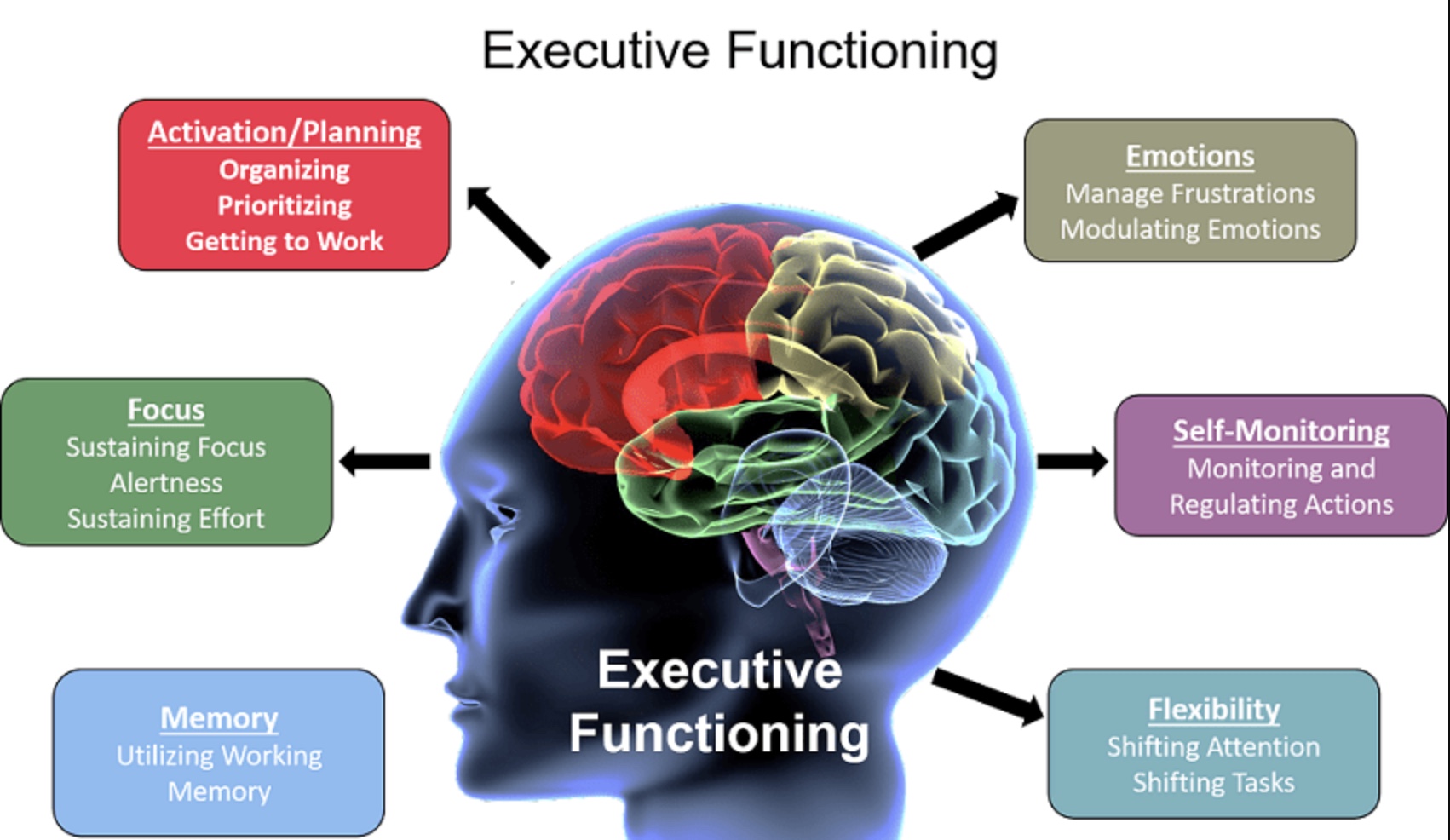
Executive functioning is the brain’s “air traffic control system.” It helps kids plan, focus, remember,
and manage emotions so they can actually follow through on what’s expected of them—at school and at home.
What Is Executive Functioning?
Executive functioning is a set of mental skills that help children manage themselves and their tasks.
It’s how they remember what to do, stay focused, control impulses, and adapt when things change. These skills develop over time and can be taught, strengthened, and supported.
Executive functioning is usually grouped into three core areas:
1. Working Memory
Working memory is the ability to hold information in your mind and use it. For kids, this might mean remembering multi-step directions (“First put your homework in your folder, then your folder in your backpack”) or keeping track of where they left off in a math problem.
2. Cognitive Flexibility
Cognitive flexibility is the ability to shift thinking, adapt to new rules, and see different perspectives. Children use it when a schedule changes, a teacher explains something in a new way, or a project needs a new approach.
3. Inhibitory Control
Inhibitory control is what helps kids think before they act. It supports impulse control, focus, and emotional regulation—like waiting their turn, staying seated during a lesson, or using words instead of outbursts when frustrated.
Why Does Executive Functioning Matter So Much?
Strong executive functioning for kids is one of the best predictors of long-term success—not just in school, but in life. It affects how children handle daily routines, relationships, responsibilities, and challenges.
Kids with stronger executive functioning skills often:
- Finish multi-step assignments more independently
- Handle transitions with fewer emotional outbursts
- Keep up in fast-paced classroom environments
- Communicate more clearly with teachers and peers
- Perform better on tests and projects
- Feel more confident and capable overall
Kids who are still developing these skills may:
- Seem chronically disorganized (“backpack disaster zone”)
- Lose materials and forget instructions often
- Struggle to get started on tasks without constant reminders
- Shut down or melt down when plans or routines change
- Avoid challenging tasks because they feel overwhelming
Signs Your Child May Be Struggling With Executive Functioning
Every child is different, but some common signs include:
- Homework that should take 20–30 minutes turns into a 2-hour battle
- Frequent “I forgot…” moments about assignments, instructions, or materials
- Difficulty breaking big tasks into smaller, manageable steps
- Emotional outbursts when plans change or routines are disrupted
- Constantly misplacing things—papers, water bottle, jacket, assignments
- Needing you next to them to start or keep going on work
Important: These challenges are not a character flaw or laziness. They are usually a sign that
your child’s executive skills need coaching, structure, and time to grow.
How Parents Can Build Executive Functioning at Home
The good news is that executive functioning for kids can improve with consistent support. You don’t have to overhaul your entire routine—small, steady changes make a big difference.
1. Break Tasks Into Smaller “Chunks”
Instead of saying, “Go do your homework,” try breaking it down:
- Step 1: Take out your planner
- Step 2: Circle today’s assignments
- Step 3: Start with the shortest task
This teaches kids how to plan and sequence, and reduces the feeling of overwhelm.
2. Use Visual Checklists and Routines
Visuals give the brain an “external memory.” Morning routines, homework checklists, and “before bed” charts help kids remember what comes next without you repeating instructions over and over.
Try This: Create a simple checklist:
- Check planner
- Complete homework
- Put finished work in folder
- Pack backpack and water bottle for tomorrow
3. Use Timers Instead of Nagging
Timers help kids understand time and stay motivated. You might set:
- 20 minutes of focused work
- 5-minute movement or snack break
- Repeat 2–3 times
This builds stamina and teaches kids how to pace themselves.
4. Model Planning Out Loud
Narrate your thinking so kids hear what planning sounds like:
“We need to leave by 5:00, so we’ll start cleaning up at 4:40. That gives us time to find shoes and water bottles.”
Over time, kids begin to internalize this process and use it themselves.
5. Support Emotional Regulation
Executive skills fall apart when emotions run high. Teaching kids to pause and name their feelings is powerful:
“I feel frustrated because this is hard.”
“I feel worried that I’ll get it wrong.”
Pair this with calming tools like deep breathing, movement, or a short break, then gently return to the task.
What About Kids With ADHD or Autism?
Many kids with ADHD, autism, or other learning differences have brain wiring that makes executive functioning more challenging.
They are not “incapable”—they simply need more explicit teaching, structure, and support.
Routines, visuals, movement breaks, and consistent coaching in executive skills can dramatically improve their confidence and day-to-day success. In some cases, professional evaluation or additional services may also be helpful.
When Should I Look for Extra Support?
It may be time to seek more support if your child:
- Is falling behind academically despite working hard
- Regularly melts down over homework or school demands
- Feels “dumb” or “behind” compared to peers
- Is constantly overwhelmed by instructions or routines
- Has growing anxiety or avoidance related to schoolwork

Executive functioning challenges are highly responsive to the right kind of coaching and environment. With support, kids often make significant gains in a relatively short period of time.
How RAAC Academy Strengthens Executive Skills
At RAAC Academy, we don’t just teach subjects—we teach the skills behind successful learning. Our programs are designed to support executive functioning for kids through:
- Structured routines that build planning and organization
- Hands-on, project-based learning that keeps students engaged
- Guided checklists and task breakdowns for complex projects
- Opportunities to practice self-advocacy and communication
- Supportive coaching to build confidence and resilience
Many students who once felt overwhelmed begin to say, “I can do this,” as their executive skills grow.
At RAAC Academy, we focus on strengthening executive functioning for kids so they can build confidence, plan effectively, and succeed both academically and emotionally.
For additional research on executive functioning, visit Harvard Center on the Developing Child.
Explore our enrichment classes and small-group programs that support planning, focus, confidence, and a love of learning.